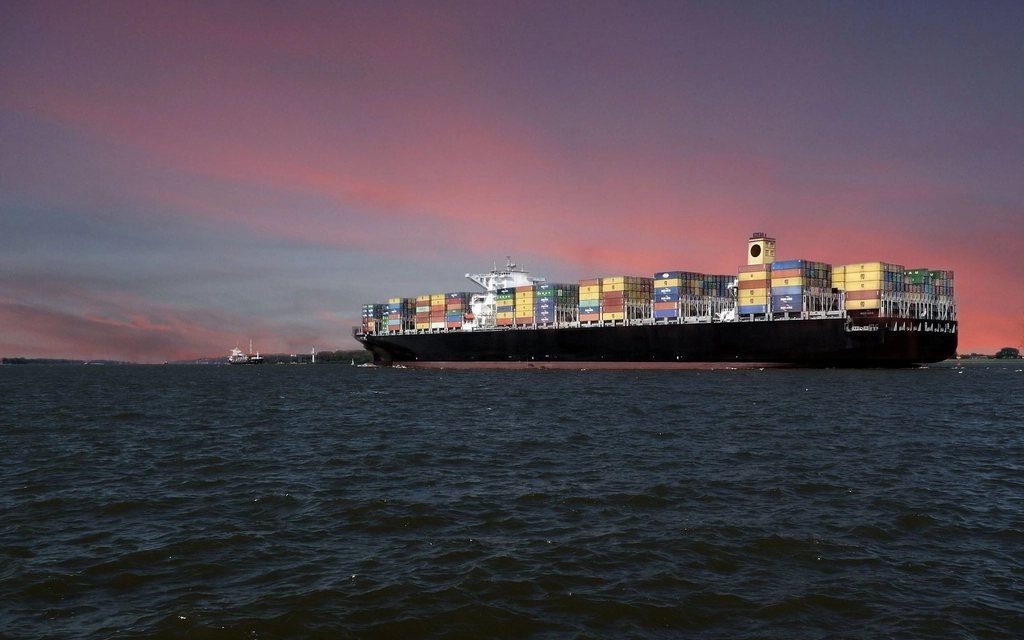

ROTTERDAM, Netherlands — Some of the world’s largest container lines are now sending roughly 40 percent of their Asia–Europe sailings on longer routes, according to a weekly tracking report released Tuesday, as tighter draft limits at a key canal crossing force heavily loaded ships to either lighten their loads or go the long way around.
The shift adds between six and nine days to a typical voyage from Shanghai to northern Europe, said the Baltic Freight Analytics Group, a industry research firm based in Copenhagen that monitors about 2,800 vessels. Spot rates for a standard 40-foot container on the route rose 18 percent over the past month, the group said, though they remain well below the peaks of recent years.
“Carriers are making a simple calculation,” said Annelies Verhoeven, the group’s head of research. “If you can only fill a ship to 70 percent of its capacity to clear the canal, it can make more sense to fill it to the brim and accept the extra fuel and time.”


Retailers brace for later deliveries
European importers say the longer routes are arriving at an awkward moment. Many retailers book holiday merchandise to land in late October and early November, and a week of slippage can push goods past key promotional dates.
The Federation of Continental Importers, a trade body representing about 600 European wholesalers, said in a statement that members had begun shifting some orders to air freight and to rail links running across Central Asia. Both options cost more, the group said, and neither has enough capacity to absorb a large share of ocean volumes.
Nobody is panicking, but everybody is recalculating. A container that was supposed to arrive on a Monday is now arriving the Tuesday after next, and that ripples all the way to the store shelf.
Henrik Aaltonen, logistics director, Federation of Continental Importers
Port operators in Rotterdam, Antwerp and Hamburg said the changes had also made arrival patterns lumpier. Instead of a steady stream of mid-size vessels, terminals are seeing larger ships arrive in clusters, which can strain yard space and truck appointments.
Canal authority points to weather, upgrades
Officials at the waterway, which handles about 5 percent of global seaborne trade, said the draft limits were a temporary response to below-average rainfall in the surrounding watershed. A spokesperson said a reservoir expansion project scheduled to finish by 2028 should reduce the need for restrictions in future dry seasons.
Not all analysts expect the rerouting to last. Rafael Montoya, a maritime economist at the Institute for Ocean Trade in Lisbon, said heavier rains forecast for the coming months could allow limits to ease by early next year. He added that carriers have strong reasons to return to shorter routes, because the extra days at sea burn more fuel and raise emissions reporting costs under new European rules. “There is a lot of commercial pressure to go back,” Montoya said. “The long route is a safety valve, not a strategy.”
- Extra transit time: six to nine days on rerouted Asia–Europe voyages
- Spot rate change: up 18 percent over four weeks
- Share of sailings rerouted: about 40 percent
- Fuel burn: up an estimated 22 percent per rerouted voyage
Consumer groups in several European countries said shoppers were unlikely to notice large price increases in the near term, because freight makes up a small share of the retail price of most goods. But they warned that specific items — bulky furniture, appliances and seasonal decorations — could see thinner selection or later arrival.
For now, shipping lines are signaling patience. Several told customers this week that they would review routing decisions every two weeks, depending on water levels and the canal’s published limits. Verhoeven said her group would continue to publish weekly figures through the end of the year. “The ocean is still moving the world’s goods,” she said. “It is just taking the scenic route for a while.”