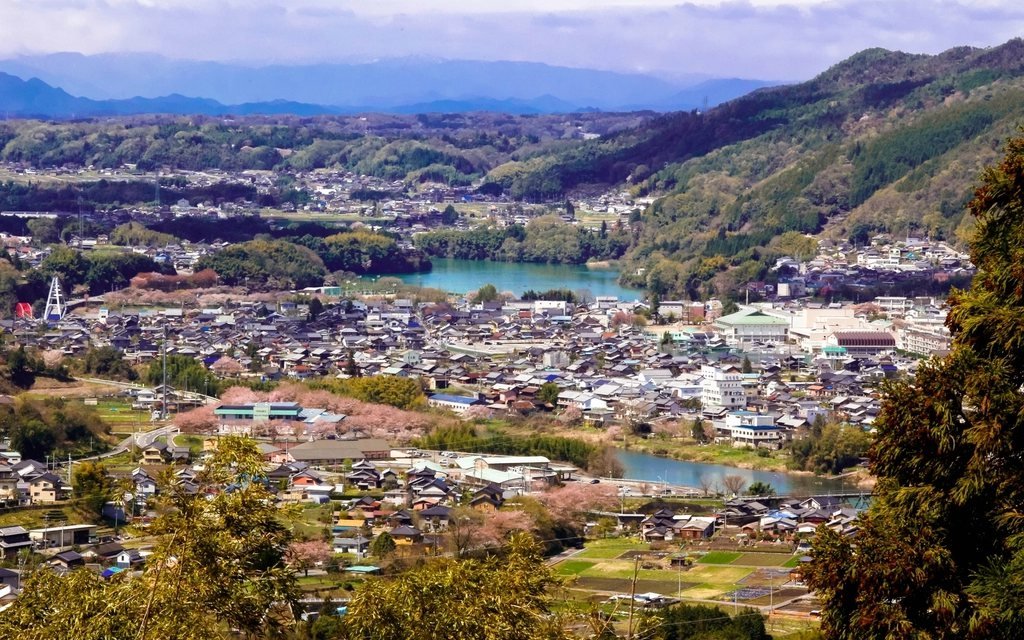

KAMIYAMA VALLEY, Japan — The house at the end of the lane had been empty for 11 years when Haruka Tanabe first saw it. Its sliding doors stuck, a corner of the roof sagged, and a persimmon tree had grown so large it brushed the upstairs windows. Last spring, she and her husband moved in, paying the equivalent of about $40 a month in rent.
The arrangement is part of a growing effort by small towns across rural Japan to fill empty homes — known locally as “akiya” — with newcomers willing to put down roots. In this valley district in western Japan, 58 percent of residents are 65 or older, and the local elementary school has just 19 students across six grades.
“We used to count how many people moved away each year,” said Kenji Morioka, who heads the district’s resettlement office. “Now we count how many houses we can save before they fall down. Every house we save is a chance for a family.”


A national problem, local answers
Japan’s population has been shrinking for more than a decade, and the decline is steepest in mountain and coastal communities far from major cities. National surveys estimate that millions of homes across the country are vacant, many of them inherited by relatives who live elsewhere and have no plans to return.
In the valley, the district government has spent about $1.2 million over five years renovating 34 vacant houses. Owners agree to lease them for at least a decade in exchange for free repairs. Tenants are chosen through interviews that focus less on income than on whether applicants plan to work locally, send children to the school or take part in community life.
- Homes renovated: 34 since the program began
- New residents: 71, including 22 children
- Typical rent: about $40 to $120 a month
- Share who left within three years: about 15 percent
Newcomers have opened a bakery, a small design studio and a repair shop for farm equipment. Several work remotely for companies in Osaka and Tokyo, relying on a fiber-optic line the district installed in 2021.
Old residents, new neighbors
Longtime residents say the arrivals have brought both energy and adjustment. Some newcomers were surprised by the expectations of village life: clearing irrigation channels in spring, joining the volunteer fire brigade and attending neighborhood meetings that can run late into the evening.
At first I worried they would treat this place like a vacation. But the young man next door shoveled my path every morning last winter without being asked. That is a neighbor.
Fumiko Ishida, 83, a lifelong resident
Researchers caution that such programs cannot reverse national demographic trends on their own. Yuki Hamasaki, a rural policy researcher at the Institute for Regional Futures in Kyoto, said resettlement efforts tend to succeed where towns also offer steady jobs, reliable health care and transport links. “An inexpensive house brings people in for a visit,” Hamasaki said. “A clinic, a bus line and a reason to work there are what keep them for twenty years.”
Some critics argue that public money would be better spent consolidating services in larger regional towns rather than trying to sustain every village. District officials acknowledge the debate but say the cost of letting communities collapse — abandoned farmland, untended forests and lost traditions — is also high.
For Tanabe, who works as a translator, the decision came down to space and quiet. Her husband now helps an elderly neighbor tend rice paddies, and the couple has started repairing a storehouse behind the home. “People ask whether we are lonely,” she said, standing beneath the persimmon tree, now heavy with orange fruit. “We have never had so many people stop by to say hello.”